JSUMC History
Celebrating 160 Years
Jackson Street United Methodist Church History
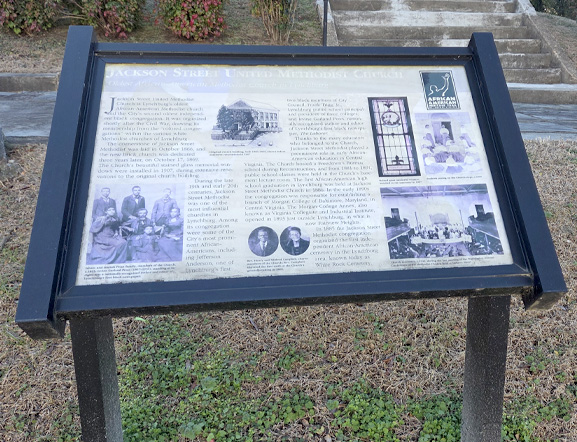
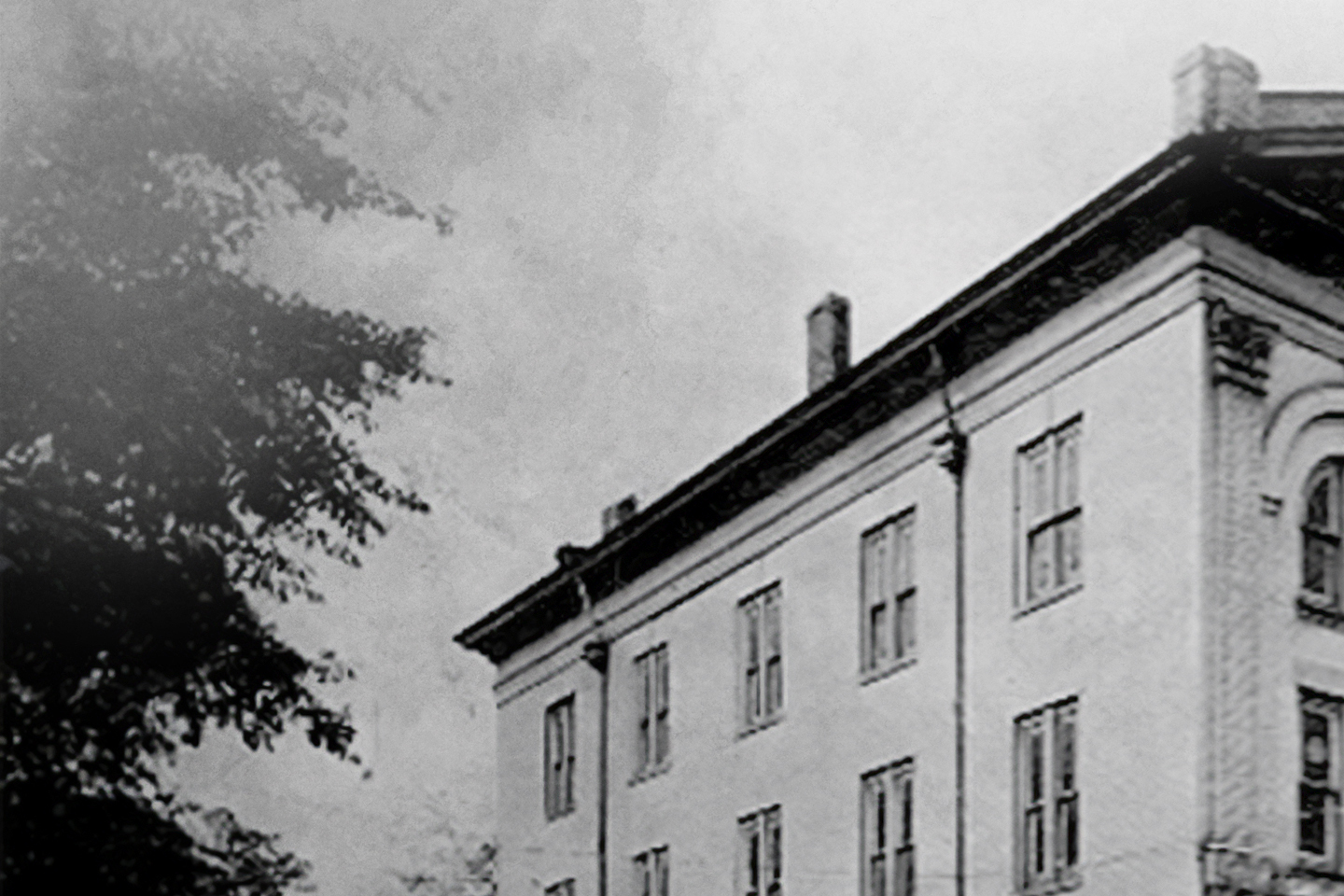
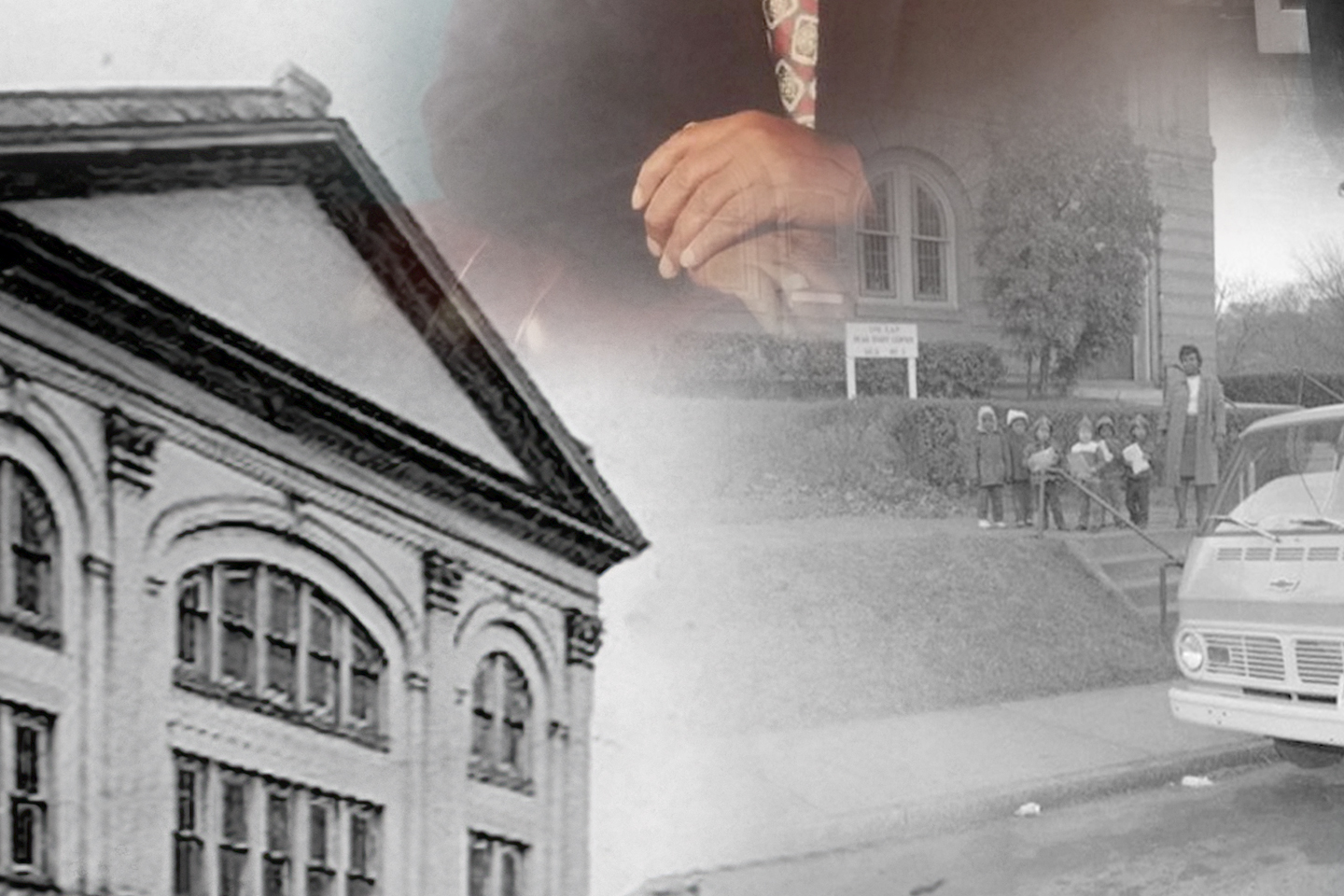
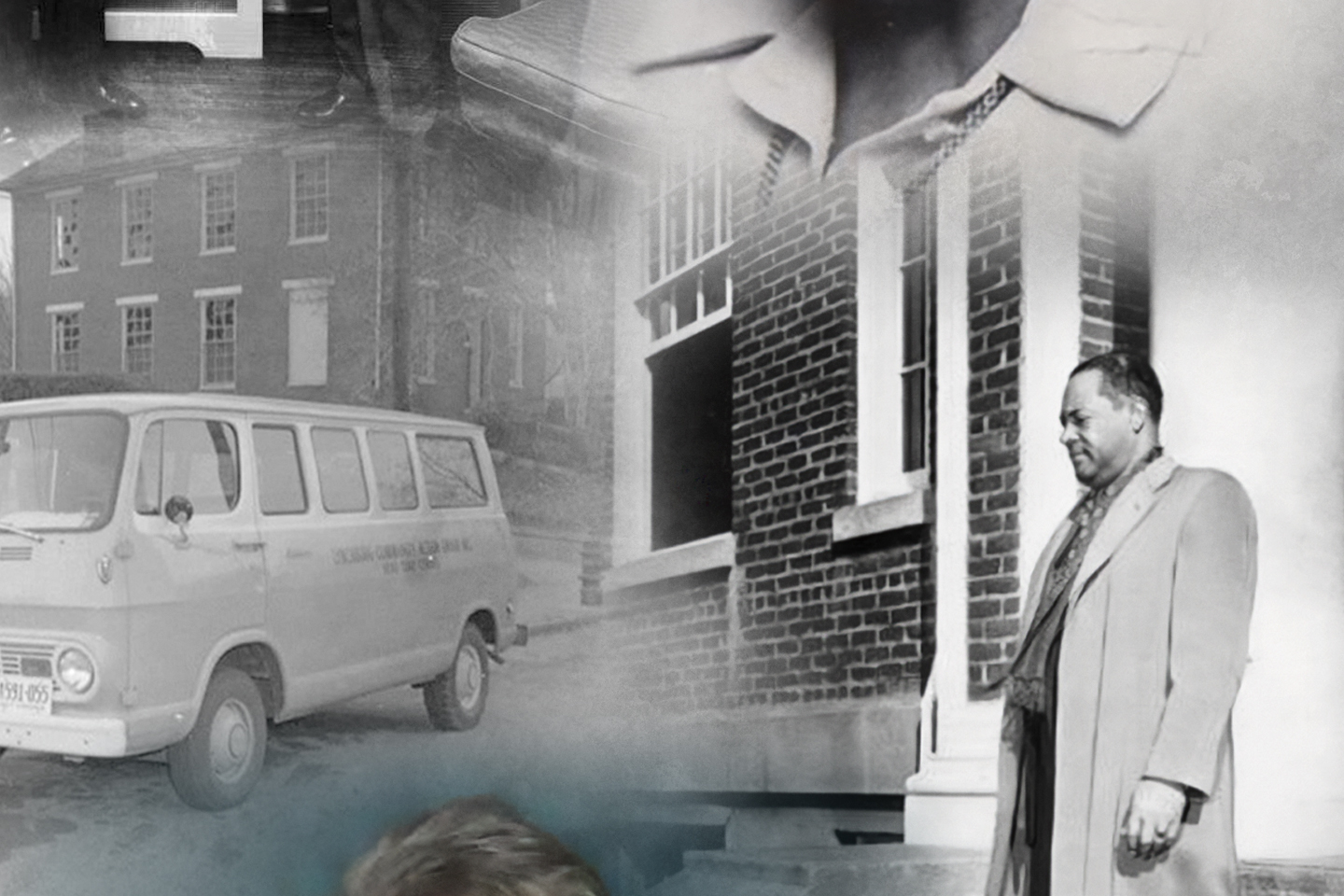
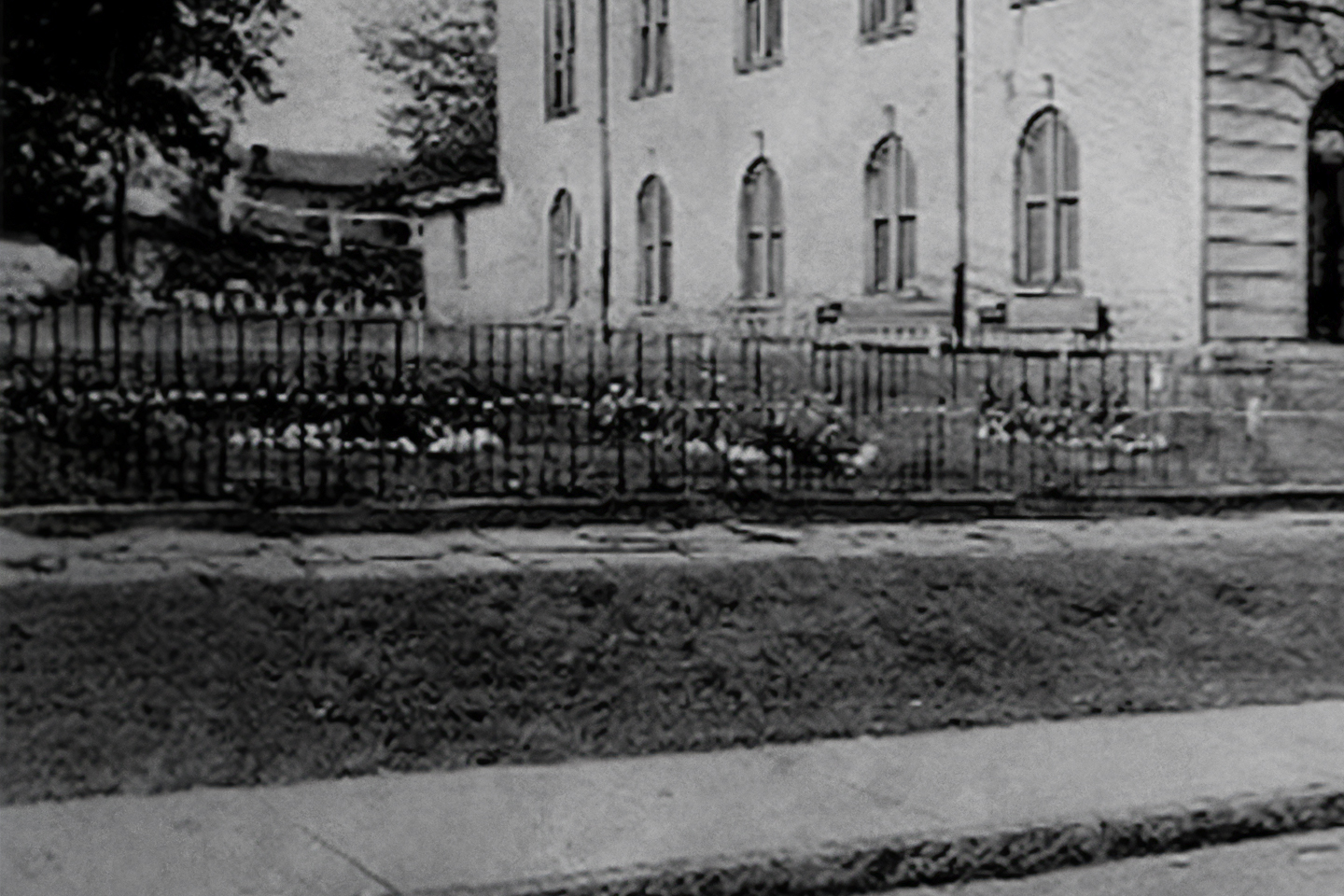
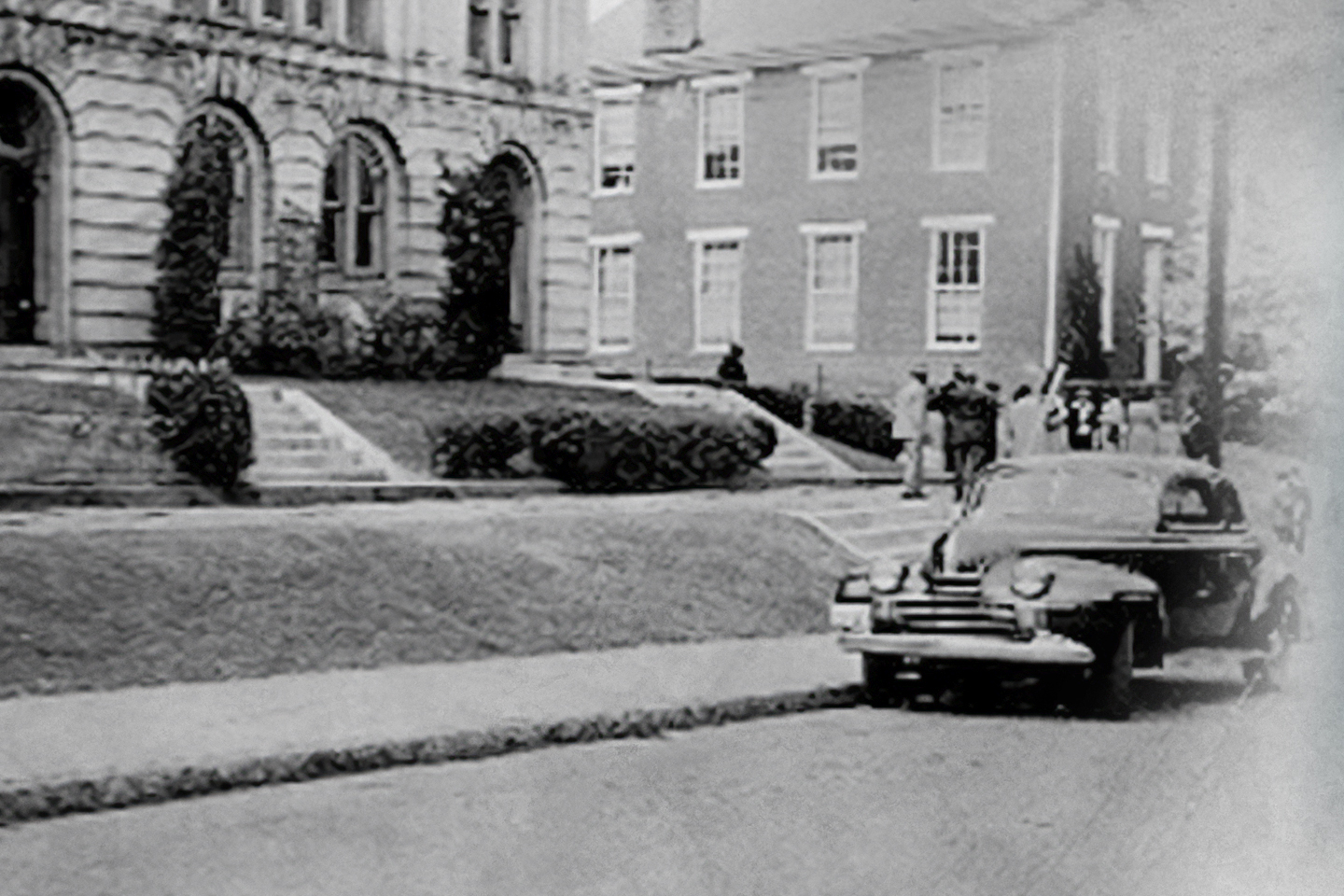
The history of Jackson Street Methodist Episcopal Church, the oldest African American Methodist Church in Lynchburg, is the story of a church founded on the principles of God’s love and the brotherhood of man. Throughout 157 years, the congregation has nurtured the importance of a personal religious experience of conversion (the basic trusting Jesus Christ as the only source of man’s salvation) and high moral standards. In 1866 Jackson Street Methodist Episcopal Church, now the Jackson Street United Methodist Church, was born. Organized shortly after the Civil War and drawing its membership from the “colored congregations” within the various white Methodist churches of Lynchburg, Jackson Street Methodist first met at a place known as Thomas Chapel under the divine Pastoral leadership of Rev. George Lewis. From there these recently emancipated slaves moved to a section of the city then known as Camp Davis. Descent of the Holy Spirit came upon them in their evangelistic services and many persons were added to the church. Being in need of larger quarters the land for the present site at Jackson and Ninth streets was purchased by the sacrificing group. The cornerstone was laid on October 2, 1866 and a new brick church was dedicated to Almighty God two years later on October 17, 1868.
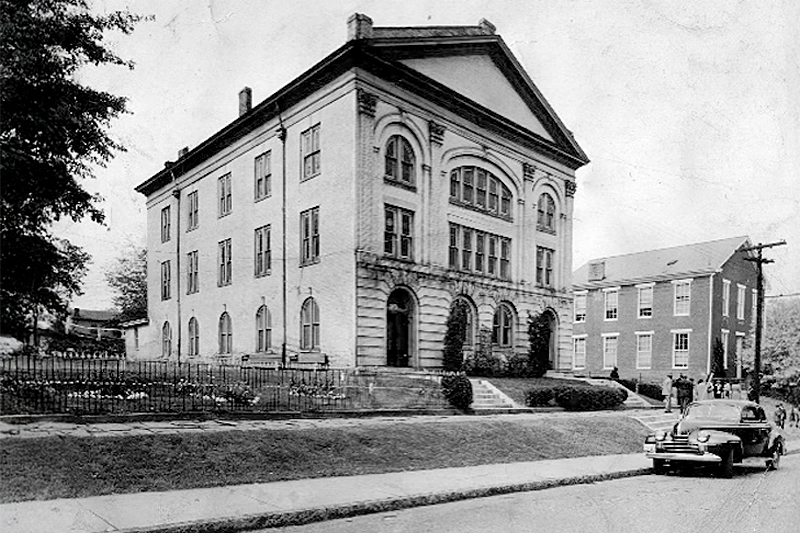
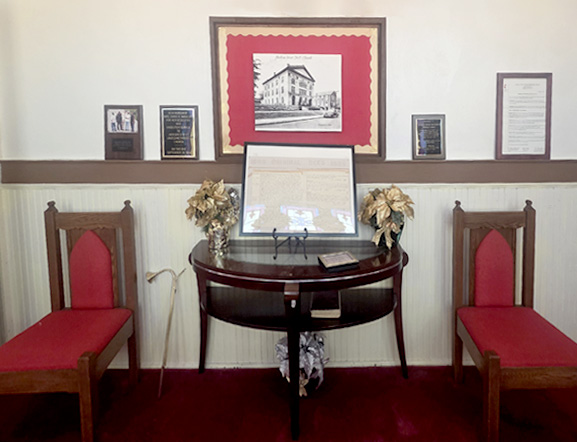
Jackson Street Methodist Episcopal Church. C. 1940s
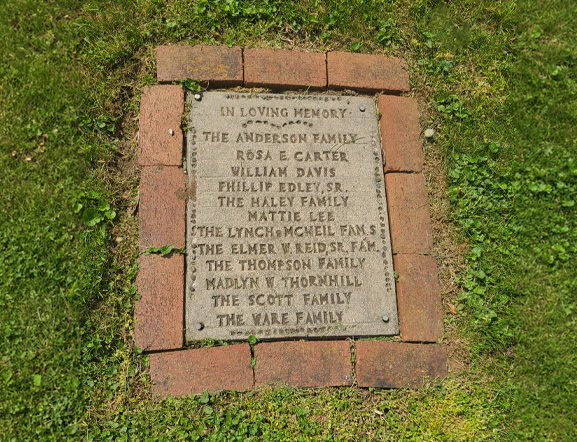
Of special note, in 1885 the Jackson Street Methodist congregation organized the first independent African-American cemetery in the Lynchburg area. The cemetery property, purchased from J. P. Shaner, was formerly the home place of Edward Lynch, son of our city’s founder John Lynch and had been his home since the 1790’s. More recently restored in 1998, under the leadership of a local community volunteer, Laura Munson and community board members, including representatives from the Jackson Street congregation, the cemetery--used for burials for over 100 years--was re-named The Historic White Rock Cemetery.
During the late 19th and early 20th centuries, Jackson Street Methodist was one of the most influential churches in Lynchburg. Among its congregation were some of the most prominent African-Americans, including Jefferson Anderson, one of Lynchburg’s first two black members of City Council; Bishop Edgar A. Love of the Baltimore area; Frank Trigg, Jr., Lynchburg public school principle and president of three colleges, including Bennett College in Greensboro, N.C.Irvine Garland Penn, nationally recognized author and editor of Lynchburg’s first black newspaper, The Laborer, and Clarence W. Seay, Dunbar High School principal for 30 years.
In more recent years the congregation is proud to have nurtured doctors, lawyers, educators, musicians, nurses, social workers, skilled laborers, pastors, national mission workers, entrepreneurs, an astronaut and a mayor. In 1993 Jackson Street United Methodist Church was blessed with the appointment of Reverend Jean Harris Page, its first female pastor.
During this 21st Century, Jackson Street has been favored with the spiritual leadership of five pastors: Willie E. Butler, Quentin A. Lawson, Alexander Duncan, Jr. Reason A. Chandler, Sr., Pastor, Rev. Mark A. Tinsley and our current Pastor Steve Propst.
Thanks to the many educators that belonged to the church, Jackson Street Methodist Church played a pre- eminent role in early African American education in Central Virginia. The Church hosted a Freedmen’s Bureau school during Reconstruction and from 1881 to 1891, public school classes were held in the basement lecture room of the church. The first class of the neighboring Jackson Street Colored High School graduated at Jackson Street Methodist Church in 1886.
Education was of such importance that the church purchased a tract of land and deeded it to the trustees of Morgan College and on October 20, 1892, the cornerstone of VA Collegiate and Industrial Institute, Morgan College Annex was laid. The school opened in 1893 just outside Lynchburg, in what is now Fairview Heights. So great was the desire of Jackson Street Methodist to assist the school that the Church agreed to mortgage its own property for $14,000.00 to help remove the debt of the Institute. The school was an important religious and educational branch of the church until it was destroyed by fire. Marvin Bass Elementary School has been erected on the old site.
The Virginia Teachers Association was founded at the Jackson Street Methodist Episcopal Church 137 years ago on August 13,1887, at the conclusion of a summer institute held for teachers to improve their skills, sometimes referred to as the Peabody Institute. The Institutes were held separately for white and black teachers but in 1887 it was determined that the state’s black teachers should conduct the summer training. This was a first for the state of Virginia and Jackson Street Methodist Episcopal Church was selected as the site.
From 1887 to 1948 the Association, like the times, evolved and so did the name. In 1948 it became the Virginia Teachers Association. This Association remained solely for black teachers until 1967 when they completely merged with the white association and became a part of Virginia Education Association. On Sunday, August 13, 2017, an unveiling ceremony of the official marker from the Virginia Department of Historic Resources was held at Jackson Street UMC by the Virginia Education Association to commemorate the 50th year of the merger between the two groups. On Sunday morning, November 14, 2010, the leadership of Trinity United Methodist Church, our sister church, proposed that we unite as one in the body of Christ. The proposal was immediately accepted by the Jackson Street congregation and acted upon during Charge Conference later in the month, becoming effective December 01, 2010. Prior to this historic merger, Trinity United Methodist Church was founded under the leadership of Bishop Robert Blackburn, District Superintendent William Knight and Pastor Carl B. Hutcherson, Jr. ,a son of Jackson Street UMC.
Numerous renovations have taken place over the years including the addition of stained-glass memorial windows in 1907; A new parsonage in 1986; and the purchasing and dedication of the Thaddeus H. Williams multi-purpose fellowship Center, located directly across from the church and named to honor the memory of Pastor Thaddeus H. Williams.
On Sunday June15, 2025 this center was rededicated after extensive renovations to the building which included a new roof, siding and awnings. The building was also renamed The Thaddeus and Lena Williams Community center as a tribute to two extraordinary who believed that when we serve God by serving others, we build something that last for generations. The church was integrated into the Virginia Annual Conference in 1968 and became Jackson Street United Methodist Church.